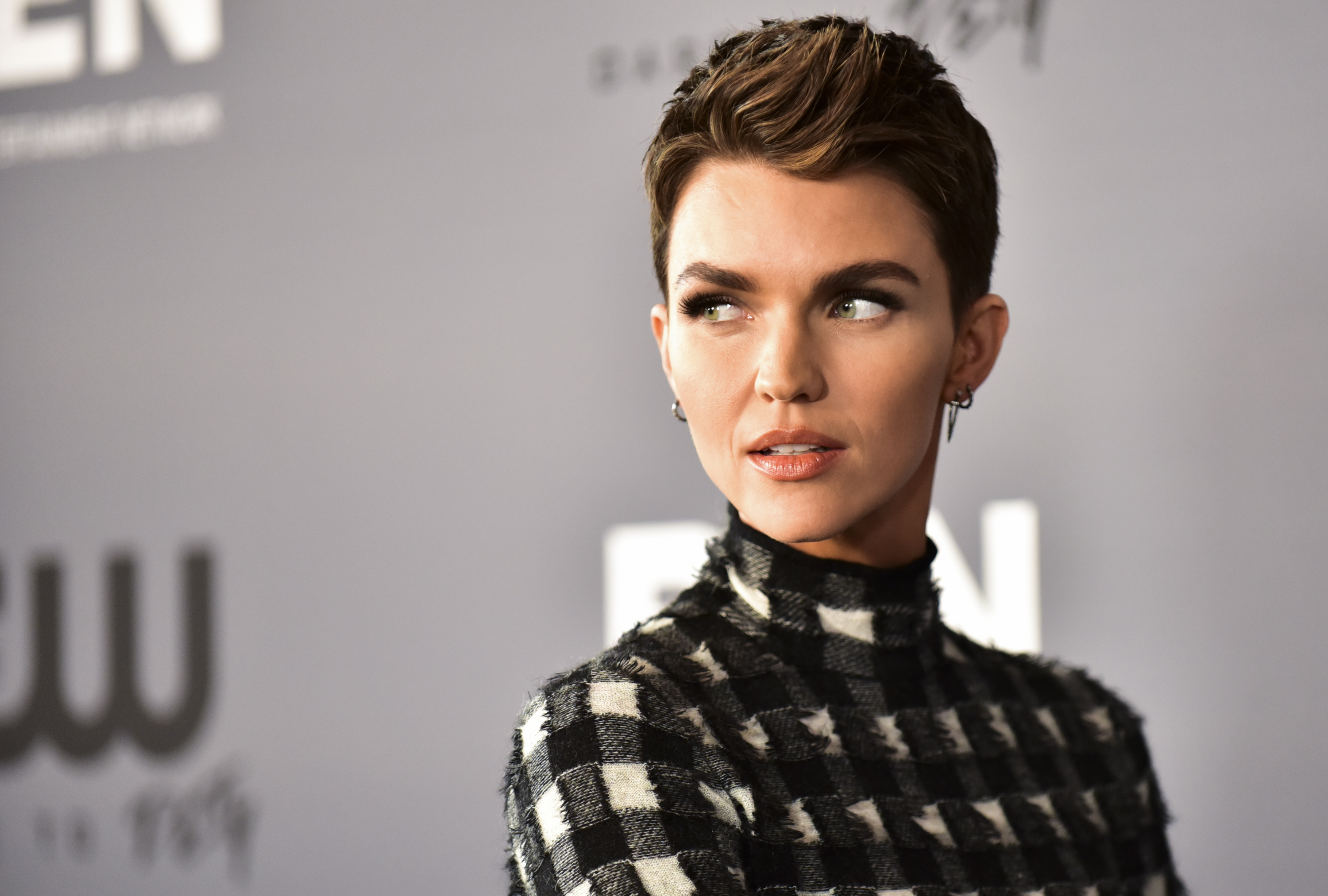
Ruby Rose has rejected the label of "lesbian actor" saying: "That's not a part of my job."
The model, actress and DJ addressed her perception in the media in an interview with Glamour magazine, whose cover she graces in this month's issue.
She recalled how she was described when she first entered the public eye in the early 2000s: "I was always Ruby Rose, the lesbian MTV VJ, the lesbian model, the lesbian actor. I was like, 'That’s not a part of my job. That’s not on my business card.'
"I didn’t study to do that, did I? I don’t have my masters in being gay. I mean, I might now, but I didn’t then."
View this post on Instagram
@glamourmag “The show is not about a gay superhero. It’s about a superhero.” - @rubyrose Ruby Rose is rejecting labels like “lesbian actress” or “lesbian superhero”—but her presence in entertainment does mean something. Ruby is one of three cover stars for our annual TV Issue. If TV is a reflection of where we are as a society, then the fall 2019 season should give you hope. Link in bio. Written by @jillgutowitz Photography by @williamshirakawa Styled by @deborahafshani Makeup by @beau_nelson Hair by @riawna Nails by @nailzbyvee A post shared by Ruby Rose (@rubyrose) on Sep 18, 2019 at 8:05am PDT
She was frequently annoyed at how her sexuality was unnecessarily brought into the conversation. "I was getting frustrated at always having to have my sexuality be a part of it," she said.
"Like, you’d never say, ‘The heterosexual DJ.’ That’s bizarre. But I realised that if I had to deal with that being really annoying for 10 years, then maybe someone else wouldn't have to."
Despite her unwillingness to be labelled as a 'lesbian actor', Rose will soon be starring as the first out leading lesbian superhero on TV in Batwoman , which is due to be released on October 6.
[caption id="attachment_445418" align="alignnone" width="1024"]
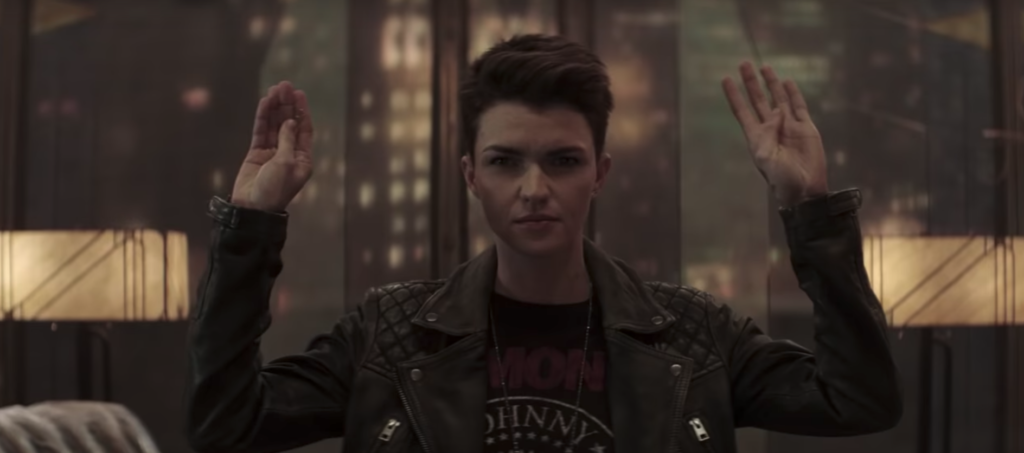
Fans got an early look at Rose's Batwoman in the teaser trailer (YouTube/@The CW Network)[/caption]
But she has previously said that the superhero’s relationship would be normalised, matter-of-fact and "just like anybody else".
"There’s a way that television shows and films often depict any kind of new relationship when it’s a woman and a woman. It often has a beginning, middle and end that’s always the same," she explained.
"Like, ‘Oh, my gosh, you’re my best friend and we’re having a slumber party in high school!’ It’s fine, because that is a way that still represents and still speaks to a legitimate way that people get together in relationships.
"But it also feels like we have to do more explaining than when it’s just a heterosexual couple."

Queer News. Straight Up.
The LGBTQ+ stories you don't want to miss, delivered to your inbox daily.