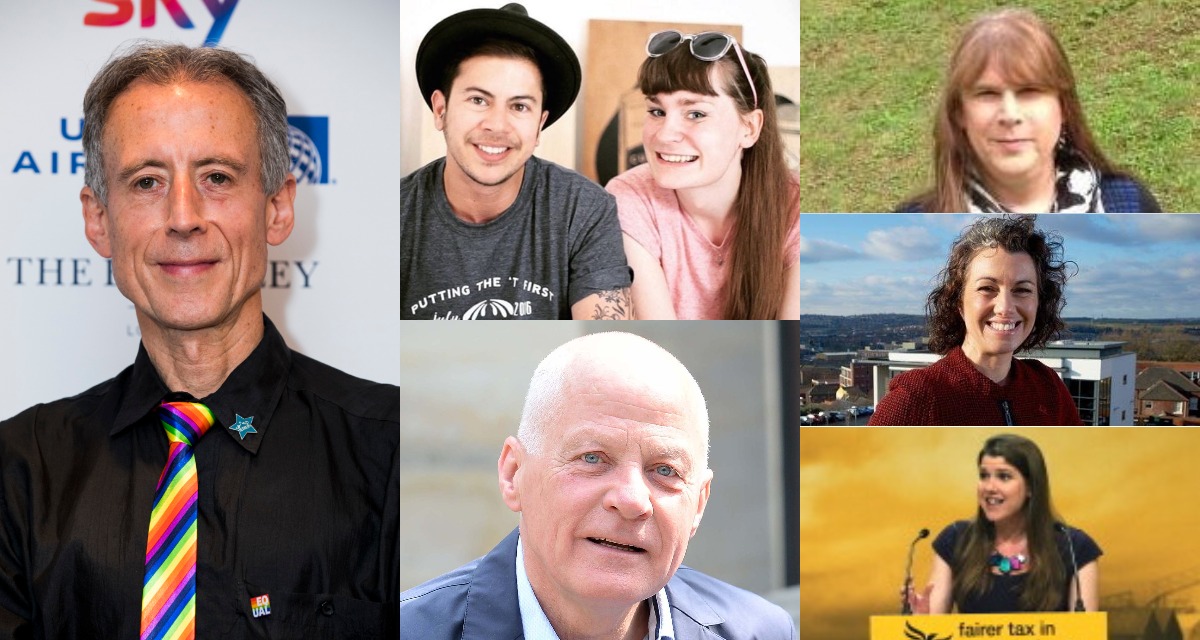
Lords, MPs, and leading LGBT+ campaigners have signed an open letter condemning anti-trans media coverage in the UK, saying hostility has led to a "significant decline in the mental health of many trans people."
The letter is signed by MPs including Jo Swinson, the Liberal Democrats' deputy leader, and ex-shadow secretary for women and equalities, Sarah Champion. It demands that British media revise their coverage of trans issues.
The document, published by PinkNews in full below, calls on the media to look at the detrimental impact anti-trans coverage has on the mental health of trans people, urging publications to apologise for the psychological damage caused over the past year.
Other people among the 41 signatories are Lib Dem peer Liz Barker, Labour peer Lord Cashman and human rights campaigner Peter Tatchell.
It's also backed by Susie Green, CEO of Mermaids UK, Jay Stewart, founder of Gendered Intelligence, Christine Burns, author of Trans Britain: Our Journey from the Shadows, and trans campaigners and non-binary film makers Owl and Fox Fisher.
The open letter was organised by Helen Belcher, chair of the LGBT Consortium and co-founder of Trans Media Watch.
[caption id="attachment_234491" align="alignnone" width="650"]

The public consultation for the government's planned review of the Gender Recognition Act closes on October 19. (Scott Olson/Getty)[/caption]
Belcher told PinkNews: “We have just had a relentless series of scare stories around trans people…that narrative largely goes unchallenged.”
“I wanted to show that there are people in influential positions who didn’t share that view.”
Belcher continued: “For my own mental health, I felt as though I needed to do something.
“It was something to do, which I thought would benefit myself, benefit trans people at large, and actually would benefit the media and society to get a few facts out rather than all this fear-mongering.”
The publication of the letter comes ahead of the end of the public consultation on Friday (October 19) on the government's proposed reforms to the Gender Recognition Act.
The government has previously said it wants to de-medicalise the process to legally change genders.
This means it could introduce a self-identification system, which is used in other countries like the Republic of Ireland, Norway and Denmark.
Currently, trans people have to obtain a Gender Recognition Certificate—after being medically diagnosed with gender dysphoria and proving that they have lived in their "acquired gender" for at least two years—in order to legally change gender.
Trans campaigners have criticised the process for being overly bureaucratic, intrusive and dehumanising.
The letter in full
We strongly condemn the way the British media has given significant coverage to small groups who wish to push organisations to break existing law with regards to trans people. The Equality Act protects trans people from discrimination and automatic exclusion from same sex spaces, yet over recent days, weeks and months, the media has given significant space to activists who wish to roll back trans people’s existing rights.
This coverage has often conflated trans women and girls with sex offenders, implied that all trans women and girls are threats, and has usually been insufficiently challenged. The reality is that trans people are far more likely to be targets of violence than other women. Isolated extreme and abhorrent cases cannot be extrapolated to infer the behaviour of all trans people. Those countries where gender recognition is operated on an administrative rather than a quasi-judicial process also do not provide any evidence to support the assertion that trans people are a threat or misuse the process to cause harm to others.
The relentlessness of the hostility across the media and the media’s inability to adequately challenge the false claims put forward have led to a significant decline in the mental health of many trans people. Reports of suicides of trans people are on the increase. Free speech does not give free reign to cause people harm.
We call on the British media to revise the way they cover trans stories, to look at the reality faced by trans people rather than focus on extreme theories which have no basis in fact, and to apologise for the significant emotional and mental stress they have caused to trans people over the past year.
Helen Belcher – Chair, LGBT Consortium Baroness Barker Dr MJ Barker Michelle Brewer – Barrister, Garden Court Chambers Baroness Brinton – President of the Liberal Democrats Christine Burns MBE Baroness Burt of Solihull – Women’s Spokesperson, Liberal Democrats Lord Carlile of Berriew Lord Cashman Prof Brian Cathcart – School of Journalism, Kingston University Dr Louise Chambers – Lecturer, Goldsmiths College, University of London Sarah Champion MP – former Shadow Secretary of State for Women and Equalities Dominic Davies – Pink Therapy UK Martha Dunkley – ClinicQ Jane Fae Fox and Owl Fisher – filmmakers, My Genderation Kate Green MP – former Shadow Minister for Women and Equalities Susie Green – CEO, Mermaids UK Dr Adrian Harrop Prof Sally Hines – School of Sociology, Leeds University Jennie Kermode – Chair, Trans Media Watch Fiyaz Mughal - TellMama Claire McCann – Barrister, Cloisters Chambers Monty Moncrieff MBE – CEO, London Friend Layla Moran MP Prof Surya Munro – School of Human and Health Sciences, Huddersfield University Nik Noone – CEO, Galop Lord Paddick Prof Julian Petley – Professor of Journalism, Brunel University Tris Reid-Smith – Owner, Gay Star News Linda Riley – Publisher, DIVA Magazine Paul Roberts OBE – CEO, LGBT Consortium Cat Smith MP – Shadow Secretary of State for Young People Dame Caroline Spelman MP Jay Stewart MBE – CEO, Gendered Intelligence Jo Swinson MP – Deputy Leader, Liberal Democrats Dr Damian Tambini FRSA – London School of Economics Peter Tatchell Dr Ben Vincent – Chair, GIRES Dr Paul Wragg – School of Law, Leeds University Dr Tray Yeadon-Lee – School of Human and Health Sciences, Huddersfield University

Queer News. Straight Up.
The LGBTQ+ stories you don't want to miss, delivered to your inbox daily.